Are Your School Employees Properly Empowered to Improve School Safety?

One thing we notice regularly in our school safety, security, climate, culture and emergency preparedness assessment work are opportunities to improve the level of empowerment of school employees to improve school safety. From preventive actions to life and death decision making, we regularly see significant gaps that relate to the empowerment of school employees to protect themselves and others.

We also often see this in school safety litigation work, unfortunately, this is often after someone has been seriously injured or killed and school safety related lawsuits have been filed. I recall a risk management instructor relating a case from Utah where a school district settled a case for millions of dollars after a student died from a medical emergency. In this truly extreme case, the district’s superintendent had put a policy in place that no one in the district could call 911 without his permission. This policy had apparently been implemented because the superintendent had been embarrassed when he could not respond to a reporter who asked him why police had been called to a school because he was not yet aware of the situation. When a student stopped breathing, there was an extended delay in calling for an ambulance while the superintendent was located.

While this is an extreme example, it is far from the most deadly. There have been other instances where the response by public safety officials was delayed while school employees tried to locate an administrator to make a life and death decision.

These deadly delays can be made less likely through proper planning, structure, training and most of all by clear empowerment of school staff that they can summon life-saving assistance or take action to otherwise save when it is appropriate.
Easy, Inexpensive and Effective – Improve Student Supervision to Enhance School Safety


Student supervision is one of the best ways to improve school safety

Students who are not being supervised in schools are more at risk

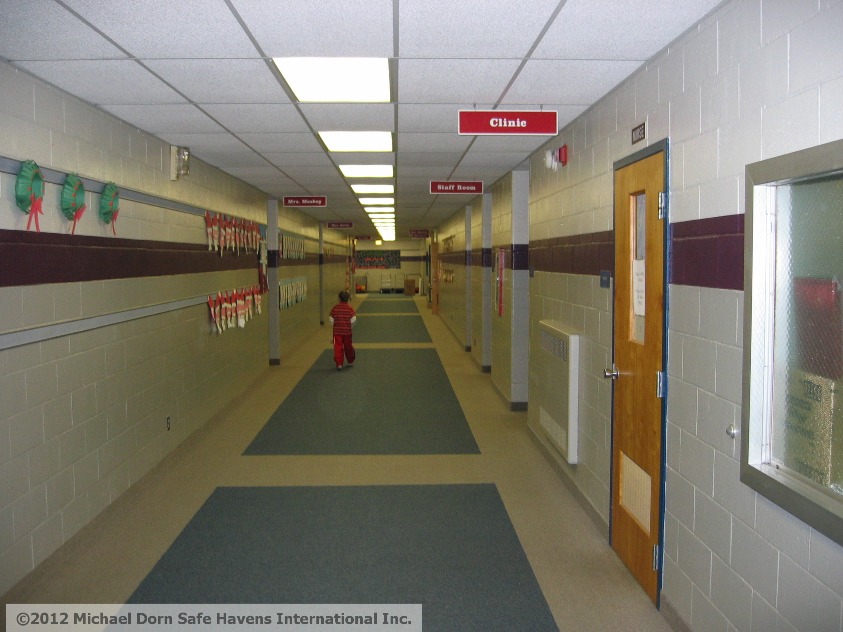
One of the most important aspects of school safety involves student supervision.

Effective student supervision practices reduce the risk of school safety incidents ranging from bullying, non-custodial abductions of students, sexual assaults on campus, weapons incidents, tornadoes and even terrorism. This is because improvements in student supervision are a powerful preventive measure while also being an important emergency preparedness tool.

For example, it is harder for someone to physically bully a student who is being closely supervised and it is not as easy to move students who are not being carefully supervised to safety if a tornado warning is received. One of the most common issues in school safety litigation involves student supervision. School safety expert witnesses are frequently asked to evaluate how much of an impact student supervision has had in a school safety incident.

Taking the time to focus on and properly address student supervision issues is time well spent.

Protect Yourself so You can Protect Others – A Critical School Safety Concept

Anyone who has flown commercial air in the last decade or so has heard the safety message that they should put their own mask on before putting the oxygen mask on others such as small children in the event of a loss of cabin pressure. Though many people do not realize just how fast they can lose consciousness, they do understand that it is logical because they cannot properly protect children if they become unconscious while trying to help a child put their mask on first. There is an important school emergency preparedness point in this example from commercial aviation. School employees should be taught to take care of their own safety first so they can in turn be capable of protecting students and other staff. As at least two school employees have already died heroically but needlessly in school shooting situations because they did not apply this concept, it bears mention.

Law enforcement officers, fire service professionals and other public safety personnel are trained on this point heavily. Many deaths in these fields have provided practitioners in those fields with object lessons that should not be forgotten. An acquaintance of mine died in just this manner when he hit a utility pole while rushing to the aid of a fellow officer. His fatal crash not only took his life, but it also diverted valuable assistance to the officer in distress because additional units had to rush to his aid when he crashed.

Just as public safety officials must be trained to overcome the natural tendency of caring people to sometimes put the safety of others first inappropriately, educational employees should be trained to consider what help they will be able to provide if they become incapacitated because they do not take adequate steps to protect themselves before they act to protect others.