New School Safety Training and Evaluation System Makes Every Second Count

New Learning and Evaluation System to enhance School Safety

Safe Havens has been scripting, filming and editing for more than a year to develop a powerful new emergency preparedness evaluation and staff development system designed to help improve the ability of school staff to make life and death decisions in the first 30 seconds of a crisis. This system is based on one-on-one evaluations with more than 500 school employees from around the nation and the research of a number of top experts. This system Safe Topics – The First 30 Seconds was released today. You can view a powerful 90-second demonstration video on the home page of our web site at http://www.safehavensinternational.org.
School Shooting in Chardon, Ohio Reminds us of Critical Aspects of School Shooting Incidents

Lessons learned from school shootings

Today’s tragic multiple victim school shooting in Chardon, Ohio is yet another reminder of some of the more critical prevention and mitigation, preparedness, response and recovery efforts that should be properly covered in school crisis plans. While no plans can be expected to be perfect, we have seen many instances where top flight school safety planning has enabled school and public safety officials to properly respond to such incidents and in a number of instances to prevent them from occurring in the first place

I should be clear that none of the following comments are intended to imply that staff at the school or in the district have made any mistakes in any of these areas. These are instead offered as lessons learned from our involvement in the wake of dozens of past school shootings that have occurred at times when students are not on class as well as for multiple victim school shootings in general.

• A number of what the United Secret Service and United States Department of Education define as targeted acts of violence have taken place at times when students are not in class. This demonstrates the need for schools to conduct drills relating to key functional protocols like room clear, reverse evacuation, emergency lockdown and evacuation at times when students are in different locations and at different times of the school day. For those who have never conducted a lockdown during passing times or a lunch period, it can be a most revealing experience.

• These types of incidents also highlight the need to provide written plan instructions, training and to conduct drills to empower staff and students to initiate life-saving action on their own without first contacting an administrator when it is appropriate to do so.

Actual incidents as well as extensive assessment simulations with hundreds of school employees from small, mid-sized and large school districts around the nation has revealed that school employees are often well prepared to function with direction under life and death stress but are frequently still not well prepared to be the person to initiate life–saving actions in the first thirty seconds of an event. The most powerful example of this is the deadly 1958 school fire at the Our Lady of Angels School fire which killed 95 students and employees. Staff at the school waited approximately five minutes before pulling the fire alarm while they tried to locate an administrator at the school.  We have seen similar stress reactions in more recent mass casualty events at schools.

• These events demonstrate the importance of focused mental simulation of a wide range of types of crisis situations. A number of researchers have documented the profound effects of life and death stress on the human mind and body. We have found that an overemphasis on active shooter scenarios can reduce the ability of staff to function for any type of incident including active shooter situations. Researchers have found that having a broad base of knowledge can help people make better decisions regardless of the type of crisis they face. While the failure to conduct drills and exercises relating to active shooter situations can be deadly, too many lockdown and active shooter drills and exercises can also be quite dangerous.

• School officials should plan and practice making decisions, communicating with both internal key staff and with area emergency responders and to effectively communicate with the public promptly but accurately in the wake of a major school crisis event. Formal training or school staff in the National Incident Management System and crisis communications are both important.

• School and public safety officials should be well prepared to perform key strategic functions such as off-site family reunification and to initiate these actions very early in the crisis. For example, the decision to begin off site family reunification should normally be made in the first five to ten minutes of the event in most types of situations. This is because parents and relatives of students often rush to the affected school during a crisis and can overwhelm responders.

There are also a number of strategies that can help to prevent these types of incidents. Successful interventions have occurred since the early 1990’s when a series of planned school shootings were averted by Bibb County Public School Police Officers and School Social workers. The concepts developed in this school system combined with techniques developed by the United States Secret Service and the United States Department of Education have been utilized to prevent numerous planned attacks at schools since that time.

• Training in visual weapons screening to help staff recognize the specific physical behaviors that can indicate that a person is carrying a gun

• Multi-disciplinary threat assessment teams

• Informational efforts to educate students to report potentially dangerous statements and behaviors

More recently, educators have been receiving on other proven tools to recognize dangerous individuals and situations that have been in use in the military, law enforcement and emergency medicine for many years. For example, many educators now receive formal training in an evidence based concept know as pattern matching and recognition. This training has helped cardiac units in hospitals reduce mortality by as much as 50% and is now being used to help school custodians, teachers, counselors, school bus drivers and other employees to detect troubled students based on subtle but clearly noticeable cues that something is not right.

We hope this information is of help to you in your efforts to make schools even safer. American K-12 schools and their community partners have made tremendous strides in reducing the homicide rate in our schools over the past three decades but more opportunities for improvement exist. Again, we in no way intend anything in this blog to reflect specifically on today’s tragic event. The information we have at this point on the incident has not been confirmed which would make any such critiques unreliable at this point.

Building Experience to ImproveCrisis Decision Making

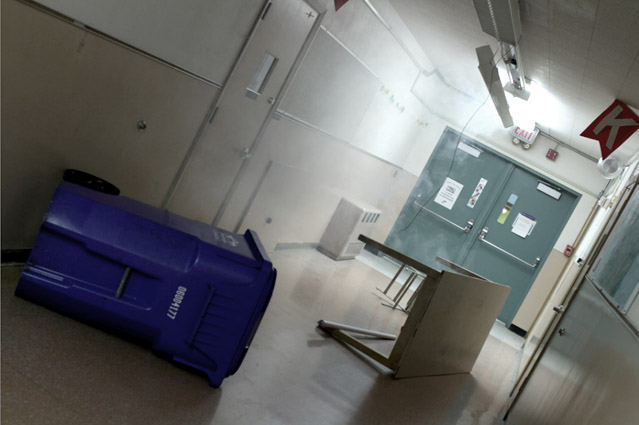
Source: Photo by Rachel Wilson, Safe Havens International Video©2012.

How campus employees will perform under extreme stress and time pressure in various physical settings and situations will depend on a variety of factors, including the depth and breadth of simulations requiring them to make decisions on an individual basis.

In his extensive research of fire commanders, emergency medical personnel, military personnel, and others who must routinely make life and death decisions, Gary Klein1 documented that people need a solid and broad base of experience to prepare them to make correct decisions on a regular basis. Klein’s research implies that the broader the base of experience people have, the higher the chance of making appropriate decisions under stress they can have. His research, as well as the work of others in the field, demonstrates that the over-emphasis on one category of event approach utilized by many organizations in the development of their emergency preparedness measures is fatally flawed because it does not match the way human beings make decisions under crisis situations.

There is often a dangerous over-emphasis on what the response should be if there is an active shooter situation on a campus. Emergency preparedness plan content, training sessions, as well as drills and exercises often focus more on this one type of event than other equally dangerous types of campus crisis situations that occur with at least as much, if not greater, frequency, such as tornados and fires. An over-emphasis on one type of event can deny campus employees the opportunity to improve their ability to think and act when lives are at stake in different situations. The frequently out of balance emphasis on active shooter situations is perhaps the most prevalent example of just how easy it can be to work tirelessly on emergency plans while inadvertently creating deadly gaps in emergency preparedness for the organization. There have been several instances of emergency plan failure in crisis situations involving campus shootings, even when they have been the type of event mostly emphasized in preparedness measures.

To prepare staff and students to be more likely to make correct life and death decisions, a greater emphasis on the all-hazards approach is needed. Focusing more than 10 to 15% of our energies on one type of scenario, such as acts of violence, will not help employees fully develop their base of experience for crisis situations as much as a more balanced approach does. Understanding how important a wide base of experience in life and death decision making can significantly influence how campus employees are trained and empowered. This aspect of emergency preparedness should also significantly impact the types and frequency of drills and exercises. Focusing too much on gunman on campus can result in needless losses, even if that is the type of event we are someday faced with.